
Reading Time: 3 Minutes
Are We Talking about the Same Thing?
Unfortunately, few terms are as ill defined, vaguely explained, poorly understood, and sloppily discussed as the word “meaning”.
– Rivka Weinberg 1
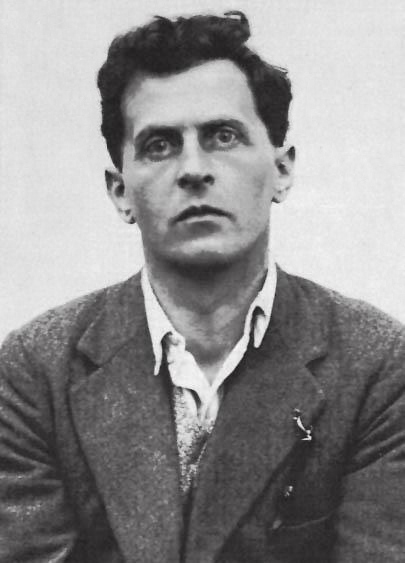
Village schoolteacher (1920–1926): Wittgenstein left philosophy to teach children in remote Austrian villages.
Gardener’s assistant (1926): After resigning from teaching, he worked as a gardener’s assistant at a monastery and seriously considered becoming a monk.
Architect (1926–1928): He collaborated with Paul Engelmann to design an extraordinarily austere modernist house for his sister, Margarethe Stonborough-Wittgenstein. The house is now regarded as an important work of modern architecture.
Hospital porter and Laboratory worker (1941–1944): During World War II, he voluntarily left Cambridge to work at a London hospital.
The potential for language to confuse is perhaps nowhere more evident than in discussions of meaning. Although nearly everyone wants to feel that their work and life are meaningful, careless use of language undermines attempts to understand what meaningful activity is.
One source of confusion is our tendency to leave our assumptions unexamined. We often speak as though meaning refers to one clearly identifiable phenomenon when a moment of reflection might reveal that it clearly does not. There are at least nine distinct phenomena denoted by the word meaning. ²
Further reflection reveals something even more important: there is no single essence of meaning. The word is used in countless ways to convey different ideas. Apparent disagreements about how to live or work meaningfully often arise not because people disagree, but because they are using different senses of the word. Careful clarification of language can dissolve many apparent disagreements.
Can Good Definitions Help?
If we develop concepts that accurately capture what we mean by meaning, we improve our ability to understand what makes activity feel meaningful.
That understanding can then be translated into practice. One can do this by creating conditions under which meaningful experience is more likely to occur.
Three Kinds of Meaning
Progress begins by clarifying the kind of meaning we are discussing. Rivka Weinberg identifies three broad kinds of meaning: Everyday Meaning, Ultimate Meaning, and Cosmic Meaning. ³
Everyday Meaning refers to the value and significance of the activities that comprise ordinary life.
Cosmic Meaning concerns our place in the universe: the significance of our role in the cosmos, the impact we have upon it, and whether our existence serves any larger purpose.
Ultimate Meaning asks a different question altogether: What is the point of living a life at all? Why undertake the project of living? What is the point of the entire enterprise?
Six Characteristics of Meaning
Clarifying the type of meaning under discussion is only the first step. Clear thinking also requires specifying which aspect of meaning we have in mind. Weinberg⁴ identifies six:
- Value: the worth of an activity or thing.
- Significance: the degree to which something matters.
- Impact: the effects or consequences of an activity or thing.
- Explanation: the extent to which something is coherent or makes sense.
- Purpose: the reason an activity is undertaken.
- Point: the valued end or objective toward which an activity is directed.
The Limits of Definitional Power
If our goal is to identify activities, work, and ways of living that are experienced as meaningful, conceptual clarification is an essential first step.
Yet we intuitively recognize that definitions are not enough.
Why is it that concepts, however carefully formulated, cannot by themselves produce the experience of meaningfulness?
The answer is that meaning—regardless of its type or aspect—is something that is experienced in living rather than contained within words. Understanding concepts that accurately describe meaningful activity is not the same as engaging in meaningful activity.
Language matters because it enables clear thought. Carefully defined concepts help us think more precisely about meaning and can guide us toward creating the conditions under which meaningful experiences are more likely to arise.
But concepts can take us only so far: They are abstractions constructed by the intellect, whereas meaningfulness is encountered in lived experience.
Concepts cannot create meaningful activity, but they can point us towards activities in which meaning can be found.
First in a new series on Meaning.
Notes:
1. Weinberg, Rivka. The Meaning of It All: Ultimate Meaning, Everyday Meaning, Cosmic Meaning, Death and Time. Oxford University Press. 2026, XII.
2. Ogden, C. K., and I. A. Richards. The Meaning of Meaning: A Study of the Influence of Language upon Thought and of the Science of Symbolism. Kegan Paul, Trench, Trübner & Co., 1923.
Ogden and Richards observe that “meaning” can refer to any of the following phenomena:
- what a speaker intends
- what a hearer understands
- the object referred to
- emotional associations
- dictionary definitions
- practical consequences
- symbolic relations
- logical implications
- social conventions
3. Weinberg. The Meaning of It All, XII-XIII.
4. Weinberg. The Meaning of It All, XII-XIII.

